Daily Repetition or Weekly Sessions? Two Practice Rhythms Compared
Daily repetition or weekly practice sessions? Compare setup, task length, and schedule demands to choose a practice rhythm that fits your skill and week.

Your guitar is resting beside the sofa, but the evening has narrowed to a few quiet minutes. On Saturday, you may have room to tune it, warm up, and work through a song. Choosing between daily repetition and weekly practice sessions means deciding what kind of return your skill needs—and what your calendar can actually hold.
These rhythms differ less in discipline than in the shape of the work. Frequent brief visits suit tasks that can begin quickly; longer sessions make space for setup and connected decisions. A workable plan should help you reach the useful part of practice without turning every session into a test of commitment.
Frequent brief sessions
Daily practice means returning on most days for a short, defined task. It need not be a full lesson or the same drill each time; the useful feature is that the skill stays close enough to resume without a lengthy reintroduction.
For piano, you might revisit one passage. For drawing, you could sketch a mug from a different angle. Keeping the notebook open on your desk, the guitar on its stand, or the current sheet music on the right page can reduce the small decisions between wanting to practise and beginning.
This rhythm fits activities with simple starting points: reading a short passage aloud in a new language, repeating a dance transition, or making a quick observational sketch. If a brief visit repeatedly disappears into setup, however, its convenience is mostly theoretical.
Longer weekly sessions
A weekly session offers room to prepare, settle in, and work through a connected task. It can suit pottery, sewing, or a project that involves several linked choices, such as revising a scene and then reading it aloud.
The longer block can also hold the setup that a short visit would struggle to absorb. You can arrange the sewing machine, choose fabric, test a seam, and make adjustments without packing everything away just as the work becomes clear.
Long gaps can make it harder to remember where you stopped. Before putting materials away, leave a useful cue: the next passage to revise, the stitch to try, or the tool you need first. That note should point to an action, not just say “continue.”
Time and attention
Short sessions can fit around a crowded day, but they need a narrow aim. If you sit down without knowing what to do, a few available minutes can vanish while you choose materials or browse for an exercise.
Longer sessions suit work that takes time to warm up or requires a sequence of decisions. When editing audio, for example, you may need to listen to a passage, mark a change, make it, and listen again. A longer block gives those actions room to connect, but it should still have a stopping point.
Think of the schedule like a kitchen counter: a clear patch is enough for a mug and a notebook, while a larger project needs room to spread out. Choose the space—and the practice rhythm—for the work in front of you.
Setup and materials
For frequent practice, keep the first materials easy to reach: a sketchbook and pencil near your chair, a language deck in your bag, or a music stand already open. A visible starting point can save you from making the same setup decisions each time.
For a longer session, gather supplies before the reserved block if that is practical. If your activity needs substantial preparation, decide whether it belongs inside the session or can happen separately; the answer changes how much time you need to protect for the actual work.
Check the setup before choosing a rhythm: if the tools are ready and the task has a clear short unit, try frequent brief visits; if preparation takes up much of the available time, choose a longer block or move setup earlier. If neither option is possible, narrow the task to one part that needs fewer materials.
When weeks change
A fixed daily time can feel natural when mornings or evenings are predictable, but it may become a burden during travel, caregiving, or a shifting work week. A weekly appointment protects more room for a project, though it can be difficult to move once other plans gather around it.
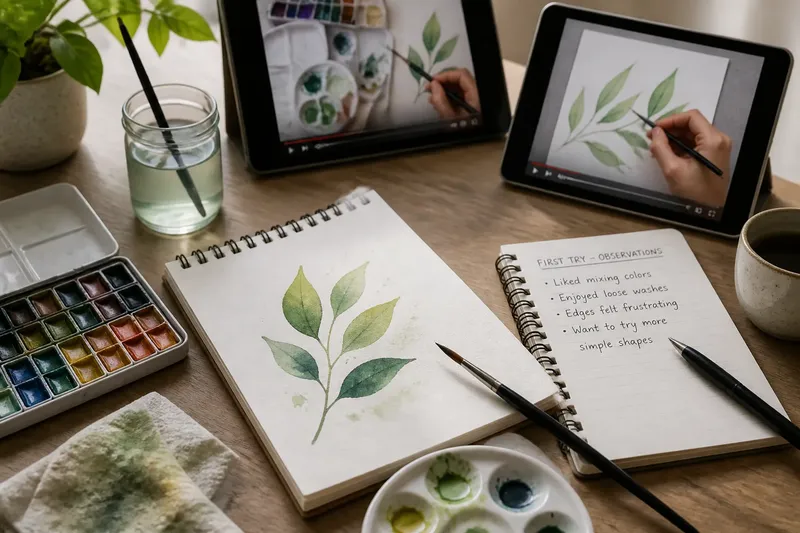
Imagine you are learning watercolour and weekday evenings are often interrupted. Your starting materials are a small palette, one brush, scrap paper, and a Sunday window for a complete painting; you plan a brief color-mixing visit when a weekday allows. If interruptions make those small visits frustrating, keep Sunday as the main session and drop the optional weekday task; if mixing colors is easy to fit in, keep it as a separate, focused return.
The useful decision is not whether your calendar looks perfectly regular. It is whether the arrangement lets you begin and resume without making the hobby compete with the rest of your life.
Match the task
Use the task’s shape to choose a starting rhythm. For each item, check the stated condition and follow the decision; if the first option does not fit, the alternative gives you another way to arrange the work.
- Frequent coordination: Check whether the skill involves a short movement or phrase you can repeat, such as a dance transition; if yes, use brief frequent visits, and if no, reserve a longer block for connected work.
- Long setup: Check whether arranging tools takes a noticeable part of the available session; if yes, group practice into longer blocks or prepare earlier, and if neither works, choose a smaller task with less setup.
- Clear small units: Check whether you can name one finished unit, such as a handwriting line or a single sketch; if yes, try a brief visit, and if no, define a narrower endpoint before beginning.
- Linked decisions: Check whether one choice depends on the result of another, as in editing a passage and listening back; if yes, allow a longer session, and if no, separate the tasks into short visits.
- Unpredictable energy: Check whether your available time shifts from day to day; if yes, make one flexible weekly block the anchor, and if no, attach a short visit to a dependable part of your routine.
- Long gaps: Check whether you often forget the next action between sessions; if yes, leave a specific written cue, and if that still does not help, add a short return between longer blocks.
These decisions are starting points, not rules about particular hobbies. A potter with tools close at hand may enjoy short visits; a musician may prefer one longer session that lets a whole piece take shape.
Questions about practice rhythms?
Is daily practice better than weekly practice?
Neither is better for every skill. Frequent visits offer regular contact, while longer weekly sessions leave room for setup and connected tasks; choose the rhythm that gives your work a usable starting point.
Can I mix short and long sessions?
Yes. You might keep a longer music session as the main appointment and use a brief visit to review one passage. If the shorter task starts feeling like a second full session, reduce its scope or leave it out.
What belongs in a short session?
Pick one action with a clear endpoint, such as repeating a passage, saying a few phrases aloud, or drawing one object. If it takes longer to prepare than to do, make the task smaller or save it for a longer block.
How can I keep a long session focused?
Decide on a modest finish point before you begin, such as revising one scene or working through a particular transition. If you reach it with time left, review what you did or stop rather than adding work just to fill the block.
Adjust the rhythm
To choose between daily repetition and weekly practice sessions, identify the obstacle that keeps interrupting the work: getting started, finding uninterrupted time, or preparing the space. Then use the rhythm that addresses that obstacle, and change it if the same snag keeps appearing.
For example, say you are practising calligraphy and your weekly block begins with a search for ink, paper, and a model letter. Your starting materials are those supplies and a lowercase alphabet sheet; you set them out beforehand, then write “repeat the lowercase joins that felt uneven” on a note beside the pen. If you begin promptly and reach that exercise, keep the arrangement; if you still spend the session getting oriented, shorten the task or reconsider whether a brief return between longer blocks would help.
Keep the record simple: a calendar mark and one sentence about what you worked on can show whether your plan is making the next return easier. A schedule is useful only while it serves the practice, so let the evidence of your ordinary week—not an idealized routine—shape the next adjustment.