The Beginner Trap of Collecting Lessons Before Trying Anything
The beginner trap of collecting lessons can keep practice abstract. Use a small first attempt to spot what you enjoy, then decide whether to continue.
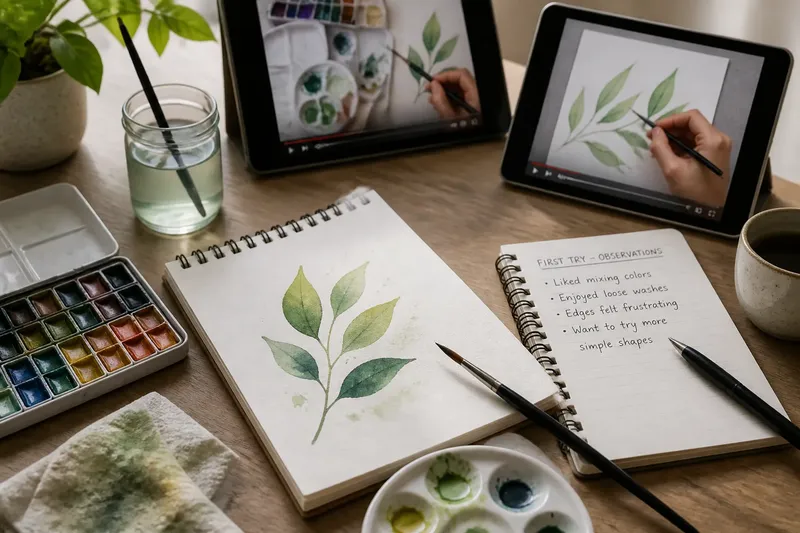
You have a new watercolor set on the kitchen table, three beginner videos open, and a saved list of brush recommendations. The beginner trap of collecting lessons before trying anything can make preparation feel safer than making a mark. But a small attempt can tell you whether the work itself holds your interest.
Preparation is useful when it clears a real obstacle, such as learning how to clean a brush or finding a suitable work surface. It can also become a way to postpone discovering whether you enjoy the activity. You do not need to turn every interest into a skill-building project; a first try can help you decide whether to keep going, change the activity, or leave it there.
Choose a small trial
Pick an outcome that lets you experience the activity without making mastery the point. For watercolor, try filling a simple leaf shape with color. For a language, write a greeting you might actually use. For spreadsheets, make a short table that organizes something you already track.
Keep the setup modest, but make it fit the question you want answered. A pen can help you find out whether you like shaping lettering, though it cannot show how a particular marker feels. Like borrowing a kitchen tool before buying a full set, a small trial helps you learn what matters to you before committing to more equipment or lessons.
Notice your response
After the attempt, look beyond whether the result seems polished. Notice which part drew you in, which part felt tedious, and whether a specific difficulty made you curious enough to try again. Those reactions are useful evidence about the kind of practice you may want, not a verdict on your ability.
Say you have a watercolor set, scrap paper, one brush, and twenty minutes, and you want to know whether painting leaves appeals to you. You paint a few simple shapes and notice that mixing greens is enjoyable, while carefully tracing edges feels frustrating. You decide to try another session focused on loose color washes, rather than buying a detailed botanical course; if the mixing also feels dull next time, you may set watercolor aside. The result is a choice grounded in the activity you experienced, not in a lesson list.
Record a few plain observations if they help: “I liked mixing colors,” “I kept avoiding the outline,” or “I wanted to try another shape.” Skip self-judgments such as “I’m bad at this.” The first descriptions tell you what happened; the second can close off options before you have decided what you want.
When should you prepare?
What should I learn before I begin?
Learn only what you need to start responsibly and understand the basic task. For a simple drawing, that may mean finding paper and learning how to hold the pencil; for a new app, it may mean opening a blank project and locating the save option.
What if I do not have the right tools?
Ask whether a substitute will let you explore the activity you care about. A regular pen can help you find out whether you enjoy lettering, but it cannot answer how a particular brush marker behaves; borrow or try that tool only if its qualities matter to your decision.
How do I choose another lesson?
First ask what you still want to know: is there a particular skill you are curious about, or are you mainly collecting material because beginning feels uncomfortable? If one concrete question remains, find a lesson that addresses it; if you cannot name one, another video may not help you decide whether to continue.
What if the first attempt goes badly?
A messy result does not tell you whether you dislike the activity or simply need more practice. Notice whether you want to understand what went wrong; if you do, try one small adjustment, and if not, it is reasonable to stop or choose a different activity.
Share a small piece
You can ask another person for feedback without turning a trial into a performance. Instead of “Is this good?”, ask, “Can you tell where the lettering becomes hard to read?” A focused question invites a useful observation while leaving the decision about continuing with you.
Imagine you write a short welcome message in a language you are learning, using a greeting you are unsure about. You ask a classmate whether the greeting suits that situation, then decide whether the answer makes you curious to learn more about greetings. You do not have to hand over the whole message or treat every correction as a reason to keep studying.
Keep the choice yours
Sometimes a trial reveals a real barrier: missing access, unclear instructions, or a task that requires knowledge you do not have. Resolve that specific issue before continuing. If the activity calls for special safety guidance or equipment, consult the relevant instructions or a qualified professional where appropriate.
Other times, you may find that the work does not interest you after you have experienced it. You can pause, change direction, or set the materials aside without needing to defend the choice. The beginner trap of collecting lessons is easier to recognize when the question shifts from “What should I study next?” to “Do I want more of this, and what would make the next try worthwhile?”
If the answer is yes, choose one resource that serves a genuine interest or question. If it is no, your trial has still helped you spend your attention more deliberately. Either way, let the next decision come from what you experienced, not from the size of the playlist.